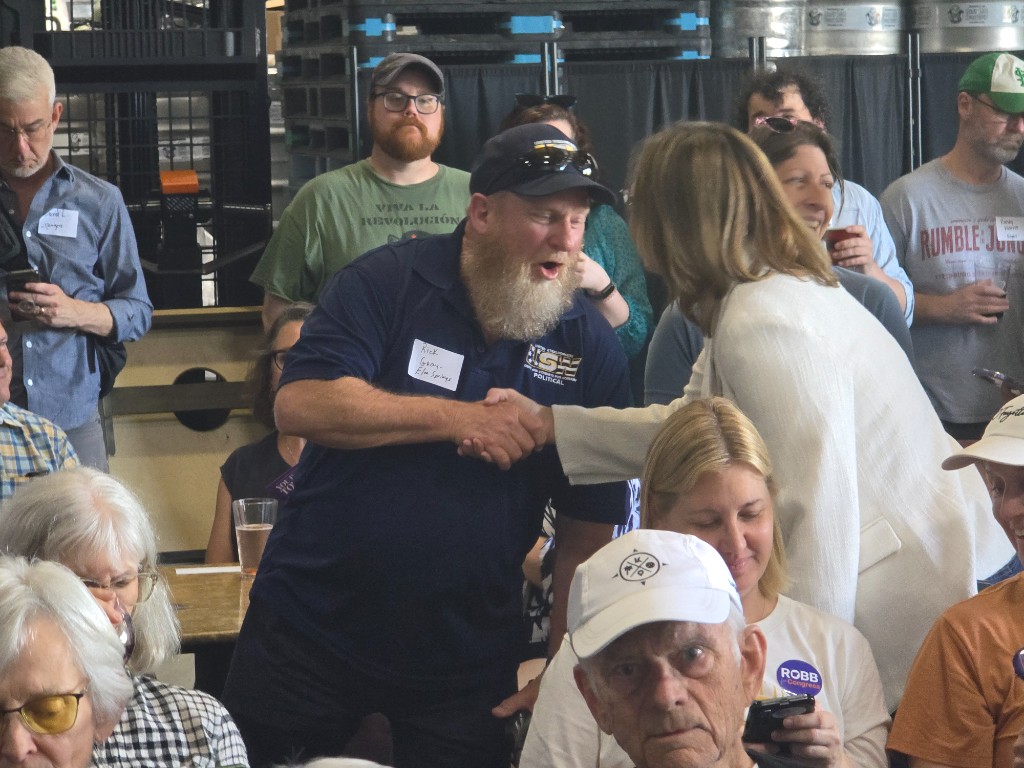
Start a local team
Why
Local trust wins elections
People believe people they see year-round—not a stranger who drops in once. A named team in your county makes the campaign believable where it matters.
How
Start with 2–5 people
Small is stable.
You do not need a crowd on day one—a few committed neighbors who will text back is enough to begin. Add rhythm and roles as you grow.
Want the relational frame first? Bring 5 Friends.
What
What your team does
Start with one thing. You can add more as you go.
- Identify supporters
- Host gatherings
- Support fairs / events
- Build Power of 5
- Share voter info
Roles
Starter roles
One person can wear two hats at first—names help the work feel real, not bureaucratic.
County lead
Holds the rhythm, convenes the team, and is the steady line back to campaign staff.
Events lead
Owns RSVPs, room basics, and clear volunteer jobs on event days.
Outreach lead
Keeps invitations going—relational follow-up, institutions, and neighbor-to-neighbor invites.
Voter education lead
Makes registration, deadlines, and voting steps plain enough to share at a kitchen table.
Media / story lead
Captures honest field notes, photos, or quotes so your county’s truth travels accurately.
Next step
Start a local team
Tell us your county and who is in your first circle—we will follow up with something proportionate.
Next
Related pages
Fairs, tour stops, and ways to invite neighbors.
FAQ
Questions at the kitchen table
Short answers—ask a human for the longer version anytime.
No. Reliability and curiosity beat résumés. If you can show up twice in a row, you can learn the rest.
We’re honest about values—but teams win when they welcome neighbors who don’t share every label. The work is civic, not performative.
So is much of Arkansas. The goal is lawful, respectful visibility—neighbor to neighbor, without surprise tricks.
Most starter teams run on a light weekly touch and one monthly rhythm. We’ll help you right-size it to your life.