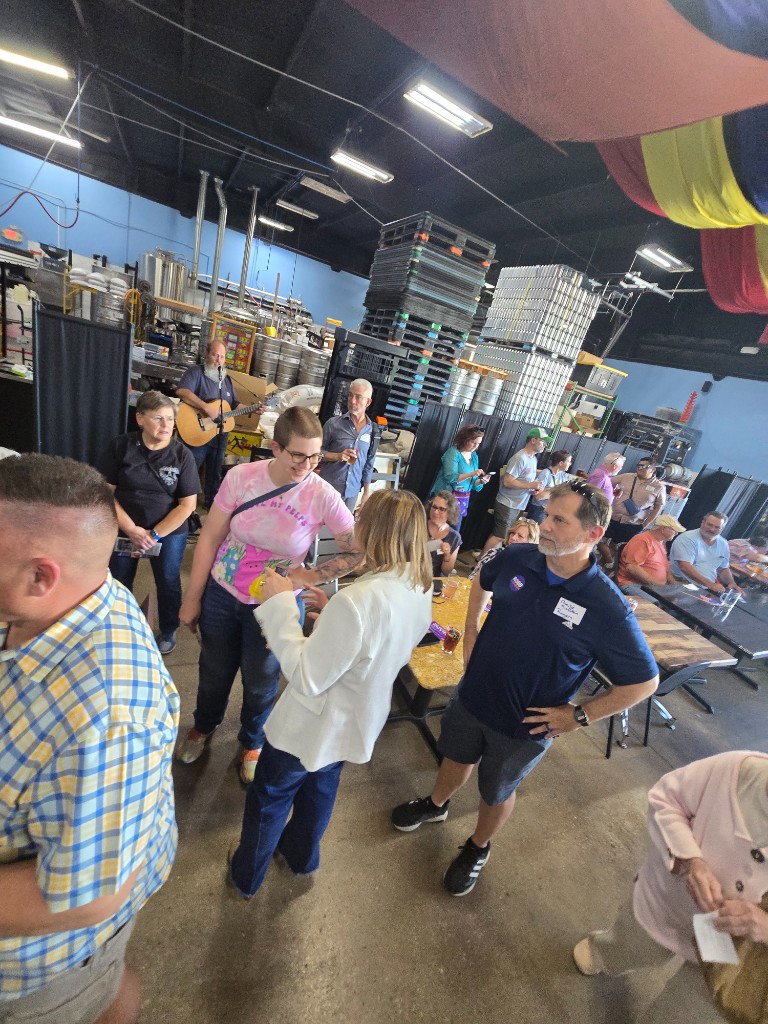
Kelly Grappe, candidate for Arkansas Secretary of State, talks with a crowd at a community meet-and-greet.
The People's Voice

The people’s constitutional voice

Arkansas is one of only 16 states where citizens have both initiative and referendum powers. Learn how the process works — then, if you choose, see how this campaign defends that right.

Why it matters

Representation alone isn’t always enough

When decisions happen over communities—fast, confusing, or closed off—people need a fair way to respond. Direct democracy is a safeguard, not a stunt.

Arkansas families shouldn’t need a law degree to understand what changed overnight. And voters shouldn’t be treated like spectators while power consolidates in back rooms.

Used responsibly, ballot initiatives and referendums can restore negotiation power: when elected leaders know the public can act, they govern differently.

We believe the initiative process should keep signature collection in volunteers’ hands—money for ads, events, and training, yes; paying people to harvest signatures, no. When campaigns buy canvassers instead of organizing neighbors, it is the same class of problem as dark money: power from whoever can write the checks, not from consent at the door.

If the people can act, power has to listen.

How it moves

Ballot initiative pipeline

Citizen-led initiatives should be disciplined: clear, coalition-backed, and understandable to neighbors—not rushed gimmicks.

  1. Issue identification

    Neighbors name a problem with clarity: what happened, who it hurts, and what voters should decide.

  2. Coalition building

    Trusted leaders align on language, scope, and responsibility—especially with communities most affected.

  3. Education

    Plain-language briefings so voters know what they’re signing, what changes, and what doesn’t.

  4. Signature collection

    Volunteer-only signatures. Organized, respectful canvassing with legal guardrails—dignity for signers and volunteers. Spend on education, training, and marketing; do not pay people per signature or by the hour to collect them. Paid canvassers are another way money can distort the process—no better, in this campaign’s view, than dark money at the door.

  5. Ballot placement

    If thresholds are met, the decision belongs to voters—not backroom deals.

Priorities

Where we start—not where we stop

These are early coalition fronts. Each will require research, legal design, and community ownership.

End dark money, confront Citizens United

This campaign is committed to doing everything Kelly can, within the law, to get secret money out of our politics. Citizens United is a federal landmark—reversing it is bigger than one state office—Arkansas can still lead on disclosure, enforcement of state rules, and a Secretary of State who will not look away. We also back voters who use the ballot initiative to pass stronger state campaign-finance law when the process is clear and community-led. For initiatives themselves, we believe signature gathering should be volunteer-only: you can fund training, materials, and outreach, but not paid canvassers—another pipeline where money can drown out authentic neighbor-to-neighbor work.

Youth civic participation

Kelly will work with the Arkansas Education Association and the public school system to strengthen nonpartisan civic education and to supply practical resources students and teachers can trust. The State Capitol and this office can be part of the invitation—age-appropriate briefings, registration basics, and pathways into voting and service—so more young people connect with the process earlier. We will still explore responsible models—like school-board participation for older students—so young people learn democracy by practicing it where decisions hit home.

Civic tools for workers and communities

The same initiative and referendum process that can strengthen finance law can also carry collective bargaining, worker power, and other issues Arkansans choose to run—if the law allows the measure on the ballot. This campaign supports citizens using those tools to write state policy, with legal design and local ownership. The Secretary of State’s role stays neutral: a fair, understandable process—forms, titles, and timelines—so voters know what they are signing and what can qualify.

Youth

A participation pipeline—not a press hit

Students live with school board decisions. When young people are included responsibly, civics stops being abstract.

Partnership with the Arkansas Education Association, district leaders, and classroom educators comes first. Kelly wants the Capitol and the Secretary of State’s office to be open doors for youth learning—public information, not partisan curriculum—so students meet elections and registration with clarity and confidence.

We’re interested in models from other jurisdictions (for example, approaches discussed in states like Maryland) as starting points for study—not promises of immediate policy.

Any serious proposal must be legally vetted, educator-informed, and grounded in what parents and students want for their communities.

Optional mock elections

Schools that want to participate should have nonpartisan ballots, process guides, and classroom-ready materials without a new mandate.

First-time voter tools

Young Arkansans should be able to find clear, practical resources before their first ballot, not after confusion sets in.

Youth service pathways

Civic education can connect students with age-appropriate election service, mentorship, and local learning opportunities.

We’re not only asking for your vote—we’re building a system where your voice can’t be ignored.
Direct democracy commitment

Civic education

Participation works when people understand the process

We’re investing in plain-language explainers, community briefings, and resources that turn confusing jargon into shared knowledge—and working with Arkansas educators to reach students, including through the State Capitol as a public venue for learning about democracy in action.

Next step

Learn the process. Stay ready.

Kelly Grappe is committed to plain-language civic education and disciplined organizing around ballot access—grounded in what the Secretary of State’s office actually administers.