Arkansas election & ballot access listening sessions
Overview
Why we’re doing this
There’s a lot of noise about elections. Many Arkansans still have good questions. The Secretary of State’s job includes helping people understand secure, transparent process—not dismissing concern or playing politics with it. These sessions start with listening.
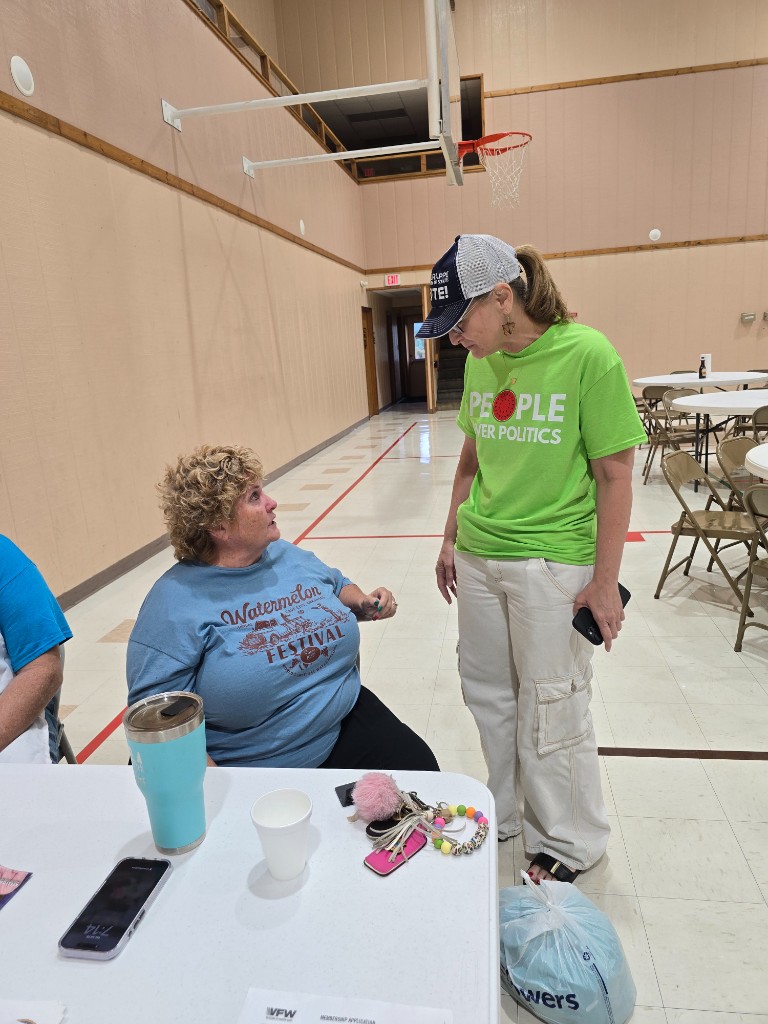
Kelly Grappe is convening a statewide series of Arkansas Election & Ballot Access Listening Sessions so voters, poll workers, petition organizers, and community leaders can share what they see, worry about, and want clarified—without an agenda, assumptions, or national talking points in the way.
Input from these sessions is meant to inform a future, transparent process review (mapping how ballot access and election administration actually work in practice—and where the public need better visibility). It starts with hearing people where they are.
On the calendar
Events planned
Scheduled stops on this tour. New official listening sessions join this list automatically when they’re on the calendar.
On desktop, use the floating squares at left (place, date, time) to open each full event page. On mobile, tiles are below.
Where
Community space — TBA
When
Mon, May 18
1:00 PM CDT
Where
The Jewish Center, Hot Springs
When
Tue, May 26
12:00 PM CDT
Where
Garland County Library, Hot Springs
When
Sun, Jun 7
9:00 AM CDT
Where
VFW Ozark Post 3246 — Mountain Home
When
Tue, Oct 6
9:00 AM CDT
Prefer the map and filters? Browse all movement events.
Purpose
What we hope to learn
The session is the product—good notes, clear themes, and respect for every chair at the table.
- Listen to voters, election workers, and community members
- Understand concerns on voting, elections, and ballot access
- Spot where process may be unclear or misunderstood
- Gather input that can inform later review and improvement
Format
What to expect (about 1.5–2 hours)
Open to the public, structured to keep airtime for people who don’t usually get the mic in politics.
Welcome & purpose
Why we’re in the room and how the time will be used.
Brief introduction
Kelly shares context for the office’s role: secure, transparent, understandable process.
Moderated listening
Roundtable time—neighbors, election workers, and leaders speak from experience.
Close & next steps
Reflections and any local follow-up the host or campaign can support.
Participants might include county clerks, election commissioners, poll workers, petition circulators, and local leaders. Officials are welcome to attend and listen—the goal is shared understanding, not putting anyone on the spot in real time.
Framing
A few words you’ll hear in the room
Process and transparency—not picking a side in every national fight.
“If people have questions about our elections, we should not ignore them—and we should not politicize them. We should listen, understand, and do the work to provide clear, transparent information.”
The office doesn’t by itself set voting systems—that sits with law and local practice—but the Secretary of State can help make sure the public can see and understand how the system works.
After listening
From listening to review
When elected, this feeds a disciplined public process: Listen → Map → Verify → Improve → Report.
The campaign’s commitment is to use what we hear in these rooms to shape a future transparent election and ballot access process review: map the system end to end, stress-test safeguards, and recommend practical improvements—with findings shared in public, not in a back room.
Key principles
- Nonpartisan and process-focused
- No predetermined outcome—real listening
- Transparency at every step
- Respect for county officials and local control
- Data-driven, methodical improvement
- Clear communication with the public
What this is not
- Not an investigation into election fraud
- Not a platform to promote or oppose specific voting systems
- Not a political debate forum
- Not a top-down directive or a place to push a platform
Your community
Bring a session to your town
We’ll build a calendar region by region. Tell us who you are, where you’re rooted, and what help you need to host a dignified, well-prepared room.
Use the form below (the same host pipeline as our other local gatherings, pre-set to listening session). You can still adjust the type if you’re also planning something broader.
After you raise your hand
What happens next
Hosting interest isn’t a one-line note—it’s the start of a plan: timing, partners, accessibility, materials, and respectful follow-up with everyone who shows up.
When you submit the form, the campaign team uses it to line up dates, confirm venues, coordinate volunteers, and make sure hosts have what they need—without losing the human details that make a listening room feel safe and serious.
If you already volunteer with the campaign, use the tools and contacts your organizer shared with you for scheduling and follow-up. New hosts can expect a real person to reach out—not an impersonal auto-reply.
Related next steps
Listening sessions are one door into the campaign — here are close neighbors on the public site.
- Community Election Integrity Tour — civic education stops and county point teams (planned).
- Invite Kelly — invite Kelly to your county room or civic gathering.
- Events — upcoming and recent campaign stops.
- From the Road — trail proof, channels, and field updates.
Not ready to host? Stay in the loop
Get updates from the road, trainings, and opportunities that match your county—without filling another long form first.