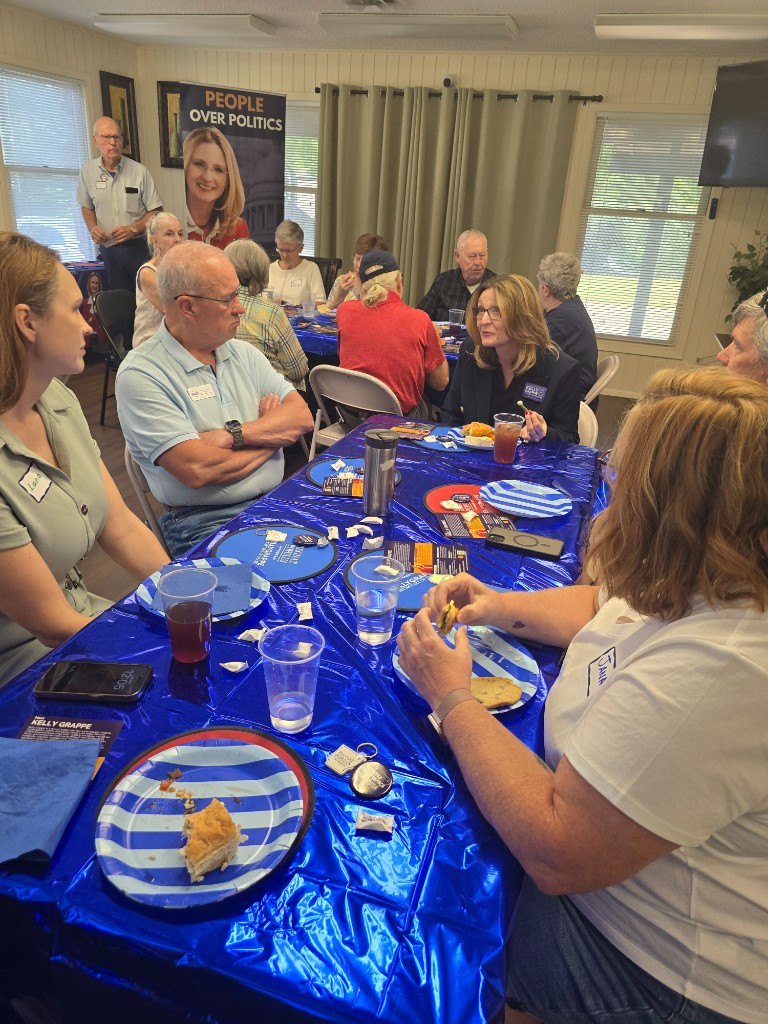
Host a gathering
Why small
Small gatherings move big public life
People risk honesty in rooms where they know who’s listening. Scale starts as repetition—many small circles, not one perfect stage.
Trust compounds
The second gathering is easier than the first—because folks saw you keep your word.
Politics gets specific
Abstract fights shrink when someone names a rent hike, a bus route, or a classroom reality.
Leaders emerge sideways
The best organizers often start as “I’ll host snacks” people—not keynote types.
Formats
Gatherings people host with us
If your idea fits in a living room, a porch, a kitchen table with postcards, or a phone-bank huddle—you’re probably in the right place.
Front porch conversation
Low chairs, passing cars, honesty with sunscreen.
Living room circle
Tea, name tags optional, a single brave question.
Coffee meetup
Public enough to feel safe; small enough to finish sentences.
Local listening session
Facilitated rounds—neighbor voice first, organizer voice last.
Issue briefing
Teach the process: what a referendum is, how a petition works, what comes next.
Postcard writing party
Simple scripts, shared stamps, a pile of paper—turn quiet supporters into a visible, voter-facing wave.
Phone bank party
Headsets optional, coffee required—pair up so first-timers sit next to someone who’s made the call before.
Plain talk
What hosting actually involves
We’re not asking for a production—just hospitality with boundaries.
- Pick a date, a place, and a rough guest list (6–25 is a sweet spot).
- Send invites that name the purpose: listening, learning, or planning—not debating cable news.
- Set simple ground rules: respect, confidentiality, and room for disagreement.
- Take light notes—or ask a friend to—so themes can travel without gossiping individuals.
- End with one optional next step: another date, a signup, or a shared meal.
Backup
What support the movement can provide
You bring the room; we help with scaffolding, training hooks, and follow-through.
- A short prep call with an experienced host or field mentor.
- Agenda shells you can adapt—not scripts to read robotically.
- Connections to translators, childcare brainstorms, and accessibility questions.
- Follow-up pathways: teams, trainings, or story capture when neighbors want it.
When you host with us, a field mentor can help with pairings and follow-up—without turning this page into a long checklist.
Raise your hand
Tell us what you’re dreaming up
This routes through the same secure intake as the rest of the site—no parallel inbox, no duplicate tracking.
After you submit
What happens next
Fast isn’t always possible—kind is.
You’ll get a confirmation that we received your note. A human organizer will follow up with a short checklist—usually within a few days, faster when we have capacity.
If you’re not ready to host yet, that’s fine. You can still join an event, volunteer to represent the campaign at a fair or civic night, or start a team with friends.
Neighbors waiting
The table only works if someone sets it
If you’ve read this far, you’re already closer than you think.