My Plan
Limits of the office. These are the limits of the office: where a change belongs to the legislature or another agency, I will advocate, evaluate, or work with partners — not claim powers this office does not have.
Priority 1
Restore Trust in Our Elections
My number one priority as Secretary of State will be restoring trust in Arkansas elections.
I hear the questions everywhere I go. Can we trust the machines? How do we know votes are recorded correctly? Who tests the equipment? Would paper ballots be safer?
Those are fair questions. Simply telling people to trust the system isn’t enough.
I want to lift up the hood on Arkansas elections and show people how our systems actually work — from the machines and testing to the security measures, paper records, tabulation and verification.
When our systems are secure, we should be able to show people why. When something isn’t working, we should acknowledge it and fix it.
Paper, machines and the role of the Secretary of State
I get asked often where I stand on paper ballots versus voting machines.
My answer starts with the law. The Secretary of State’s job is to administer Arkansas election law and support counties in carrying it out.
Regardless of the lawful system a county uses, my responsibility is to make sure election officials have the training, resources and support they need to administer secure elections voters can trust.
When we’re considering new technology or processes, my standard will be straightforward: Is it lawful? Is it secure? Is it verifiable? Is it practical? Is it scalable across 75 very different counties?
And we should listen to the people actually doing the work before we make those decisions.
Learn what works. Fix what doesn’t.
Counties shouldn’t have to reinvent the wheel. When something works well in one Arkansas county, we should share it. When another state has developed a better practice, we should study it and decide whether it makes sense for Arkansas.
And when the same problem keeps showing up — whether it’s equipment, training, technology or a vendor — track it, find the cause and fix it. That’s what the evidence is for.
Let people see for themselves
I want Arkansans to have more opportunities to ask hard questions and see our election systems firsthand.
If someone questions a voting machine, show them how it works. If they want to understand how ballots are protected or results are verified, walk them through it.
Questions aren’t the enemy of election security. Secrecy and confusion are.
I don’t want Arkansans to trust our elections because the Secretary of State tells them to.
I want us to build systems worthy of their trust — and then lift up the hood and let them see for themselves.
You asked. We’ll show you.
I want the Secretary of State’s office to pay attention to the questions Arkansans are actually asking about our elections: Can a machine change my vote? What happens to my ballot after I cast it? How are voting machines tested? How are voter rolls maintained? What happens if equipment fails? How are results verified?
Those questions deserve answers. We’ll regularly identify the questions and concerns we’re hearing from voters and create simple ways to answer them — through short videos, demonstrations, diagrams, public information and opportunities to see election processes firsthand.
You ask. We’ll show you.
Make security requirements easy to understand
I support Arkansas’s voter ID requirement. But a security measure only works well when voters understand it and eligible voters have a clear path to comply.
The Secretary of State should make sure every Arkansan knows what forms of identification are accepted, what to do if they don’t have one, and where they can get the identification they need.
Arkansas provides a path for eligible voters who need identification for voting purposes, and that information should be easy to find and consistently communicated across the state.
I want clear information available online and through counties — including the optional social media and voter-education materials we provide to local officials.
Secure elections and accessible elections are not competing goals. We should be committed to both.
Priority 2
Protect the People’s Constitutional Voice
Arkansas is one of only 16 states where citizens have both initiative and referendum powers. Our Constitution doesn’t simply allow citizens to participate in this process — it reserves that power to the people.
In recent years, the legislature has repeatedly added requirements and barriers to exercising that right. The process has become so complicated and unforgiving that ordinary Arkansans can invest months of work, organize volunteers, gather thousands of signatures and still lose their effort over a technical or procedural issue.
A constitutional right shouldn’t require an army of lawyers and political professionals to exercise it.
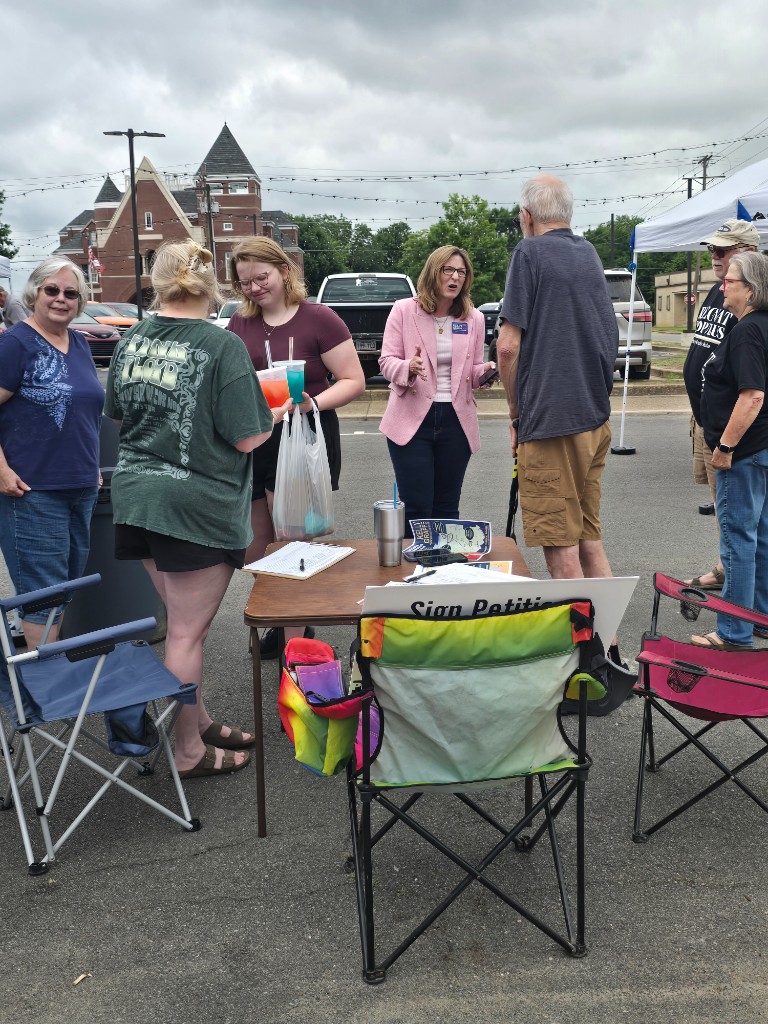
I want to build a process that ordinary Arkansans and grassroots organizations can realistically navigate.
No gotchas at the finish line
The Secretary of State should be a fair administrator of the process, not a gatekeeper. That means more than putting instructions on a website.
I want to establish clear checkpoints throughout the initiative and referendum process so sponsors know whether they have met the requirements at each stage before investing months of work and thousands of volunteer hours.
If something is wrong, identify it when it can still be addressed — not at the end of the process when it is too late to fix.
The goal isn’t to lower the legal standard. It’s to create a process that helps people understand and meet it.
Build a process ordinary people can use
The Secretary of State’s office should provide a clear roadmap from beginning to end: requirements, forms, deadlines, examples, checkpoints and the status of a petition as it moves through the process.
We should look at every step and ask: Is this required by law? Is it clearly explained? Do people know what happens next? And are we administering it consistently?
I also want civic education around direct democracy so Arkansans understand not only how to sign a petition, but how citizens can organize, propose a measure and exercise this constitutional power themselves.
Direct democracy shouldn’t become something only well-funded organizations can successfully navigate. It belongs to the people.
Defend the right — regardless of the issue
I won’t agree with every initiative Arkansans put forward. That’s irrelevant to the responsibility of the office.
You don’t have to agree with what the people are proposing to defend their right to propose it.
The rules should be applied consistently regardless of the issue, the organization behind it or the politics surrounding it.
And when legislation threatens to make this constitutional power unnecessarily harder for ordinary Arkansans to exercise, the Secretary of State should use the voice of the office to defend the process.
All political power is inherent in the people.
Priority 3
Support All 75 Counties
Arkansas elections are administered locally. County clerks, election commissioners and their teams are the people closest to the work and closest to the voters.
I want to build a culture inside the Secretary of State’s office that starts with a simple question: How can we help you succeed?
That means listening before building new processes, involving county officials in decisions that affect their work, and creating an office where service to our counties is part of the culture — not just a function on an organizational chart.
Listen to the people closest to the work
I’ve spent much of my career supporting teams across multiple locations, and I’ve learned that the people doing the work usually know where the problems are.
I want regular opportunities for county officials to tell us what’s working, what isn’t and what they need from the state. And I want that feedback to matter.
We shouldn’t build a solution in Little Rock and then find out whether it works in all 75 counties. We should build it with them.
Get out of Little Rock
The Secretary of State is a statewide office. It shouldn’t feel like a Little Rock office.
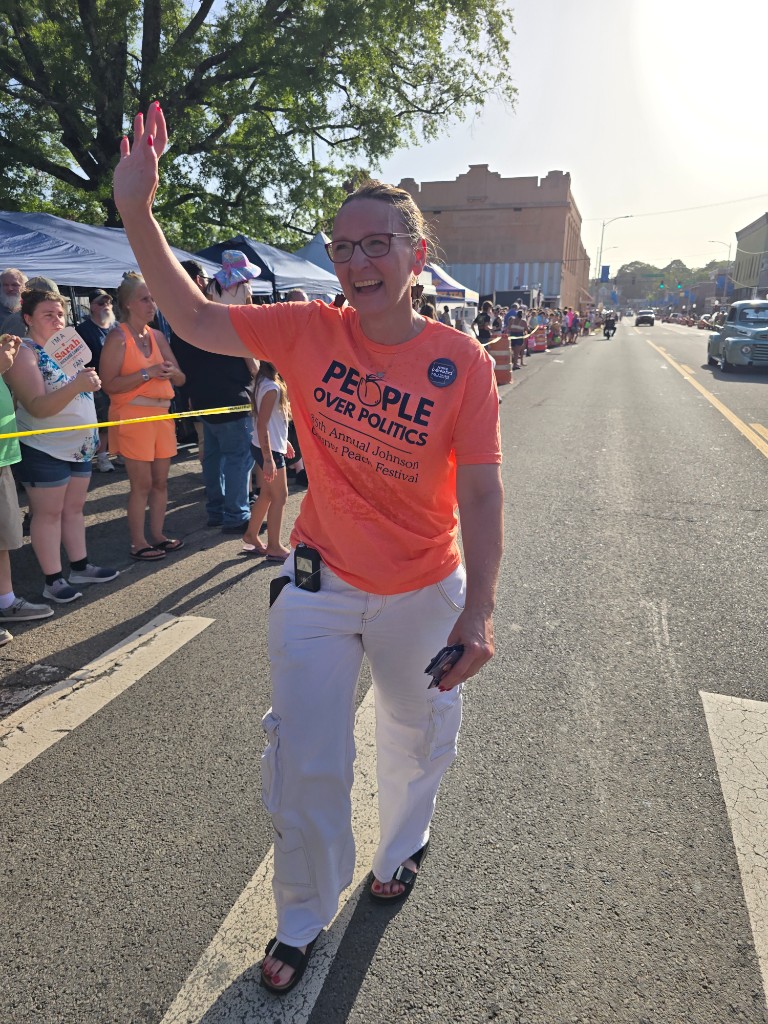
I plan to spend meaningful time in the field — regularly visiting counties, sitting down with clerks and election officials, and hosting Secretary of State office days in communities across Arkansas.
I want to see the systems where they’re actually being used, hear directly from the people doing the work and understand the challenges that may look very different from county to county.
Some problems are difficult to see from behind a desk in Little Rock. I intend to go see them for myself.
Make their jobs easier
Partnership also means looking for practical ways the state can take work off counties instead of adding to it.
Not every county has communications staff or the resources to create voter-education materials for every election. The Secretary of State can create optional, editable social media graphics, voter-registration reminders, early-voting information, voter ID explainers and other materials counties can use and customize if they choose.
If we can build something once at the state level that saves 75 counties time and money, we should.
Build a culture of sharing
Some of the best ideas will come from county clerks, election commissioners and staff who have spent years figuring out how to make elections work in their communities.
I want the Secretary of State’s office to help find those ideas, recognize them and share them across Arkansas.
Listen. Support. Share what works. Give people the tools to succeed. And never forget that the people closest to the work should have a voice in how the work gets done.
Priority 4
Make Government More Transparent
Transparency shouldn’t mean information is technically public if you know where to look, who to ask, or which form to file. It should mean people can actually find and understand the information their government holds.
I want the Secretary of State’s office to become a model for that kind of transparency.
Make FOIA work better
FOIA requests tell us something important: what the public wants to know.
I want an efficient, accountable system for receiving and tracking requests from beginning to end. We should know when a request came in, where it is in the process, who is responsible for it and whether it was completed on time.
Then I want us to use that information. If Arkansans are repeatedly requesting the same records, we should ask why we’re making them request those records at all.
Identify the most commonly requested public information and proactively make it available online whenever possible.
Build a website for the people using it
A government website shouldn’t require people to understand the organizational chart before they can find what they need.
I want to redesign the Secretary of State’s website around the questions people actually come there to answer: How do I register to vote? Where do I find election information? How do I start or maintain a business? How do I become a notary? Where is this public record? How does the ballot initiative process work?
Information should be searchable, mobile-friendly, accessible and written so people can actually use it.
Show the work
Important reports, contracts, spending information, election guidance, major projects and other frequently requested public records shouldn’t be scattered across a website or buried in PDFs when they can reasonably be organized in one place.
I want to build a public transparency portal that makes that information easier to find and follow.
It’s about making public information genuinely public.
Measure our own performance
If I expect counties, vendors and systems to be accountable, the Secretary of State’s office should be accountable too.
I want to create a public SOS Performance Dashboard with meaningful measures of how well the office is serving Arkansans. That could include business filing turnaround times, FOIA response performance, county support requests and other service measures that help us identify where we’re doing well and where we need to improve.
Set the standard. Measure the results. Publish them. Get better.
Priority 5
Make Election Processes Work Better
I’m a process person.
When something isn’t working well, I want to understand where it breaks down, why it breaks down and what we can do to make it better.
That starts with listening. Voters and county officials experience these systems every day. Their feedback can tell us where processes are confusing, repetitive, inefficient or creating unnecessary work.
I want to use that feedback and the information behind it to identify the breakpoints — then fix what we can.
Simplify voter registration
Voter registration is one example.
When an Arkansan registers through the DMV, information moves between state and local systems. I want to evaluate that entire process and identify unnecessary manual entry, duplication, delays and opportunities for systems to communicate more efficiently.
Technology should reduce work and errors, not create another layer of complexity.
Make absentee voting easier to navigate — without sacrificing security
I support Arkansas’s current absentee-voting framework. Arkansas does not have universal vote-by-mail, and changing who qualifies to vote absentee is a decision for the legislature.
But administering the process well is the responsibility of election officials, and I believe we can look for ways to make that process more accessible while maintaining its security.
That means evaluating the experience from beginning to end: requesting an absentee ballot, understanding the requirements, meeting the deadlines, returning it correctly and knowing whether it has been received.
Other states use technology that allows voters to track the status of their absentee ballot. I want to evaluate tools and best practices like that for Arkansas — not because another state does it, but because secure technology may give voters better information while reducing questions and administrative work for counties.
Find the breakpoints
Listen to voters. Listen to counties. Map the process. Find the breakpoints. Look at the information. Determine what can be simplified or improved.
Is it lawful? Is it secure? Is it practical? Is it scalable? And does it actually solve the problem?
Some improvements can be made administratively. Others will require technology investments, partnerships with other agencies or action by the General Assembly.
My job isn’t to change Arkansas election law from the Secretary of State’s office. My job is to administer it well — and make the systems around it work as well as they possibly can.
Priority 6
Build a More Engaged Arkansas
Arkansas consistently struggles with voter participation. Too many eligible Arkansans aren’t registered, and too many registered voters don’t make it to the polls — especially in elections outside of presidential years.
I don’t believe that’s because Arkansans don’t care.
I think too many people don’t understand the system, don’t believe their participation matters, or don’t feel like there is a place for them in it.
I’ve spent my career in learning and development, building ways to take complicated information and make it practical and useful. I want to bring that experience to civic education across Arkansas.
Teach people how to participate
Civic education isn’t about telling people what to think or how to vote. It’s about teaching people how to participate.
I want the Secretary of State’s office to create practical, nonpartisan resources that schools, libraries, counties and community organizations can use.
Not another 50-page government booklet. Short, useful learning about how to register and vote, voter ID, early voting, absentee voting, how elections actually work, what local and state offices do, how direct democracy works, how to engage with government and even how to run for office.
Learn how to talk to each other again
Civic engagement isn’t only about knowing how government works. We also have to relearn how to listen to one another.
I want to create regular civic dialogue sessions at the State Capitol where Arkansans with different backgrounds and viewpoints can come together — not to win an argument, but to understand one another better.
The model is simple: listen to understand instead of listening for your turn to respond. Ask questions. Be curious about why someone sees an issue differently. Learn how to disagree without treating the person across from you as the enemy.
These would be nonpartisan conversations, informed by proven approaches to bridging political divides, including models like Braver Angels.
The Capitol shouldn’t only be the place where our political disagreements play out. It can also be a place where we learn how to have them better.
Give young people a real place at the table
I’m especially committed to young Arkansans.
I don’t believe our young people are apathetic. I’ve seen what happens when they’re given real responsibility, meaningful work and a reason to believe their voice matters.
We keep calling them our future. They’re our present, too.
That’s why our campaign is already investing in young people through the Arkansas Youth Coalition (AYC) — giving young Arkansans opportunities to learn how to organize, engage their communities, understand government and use the civic power they already have.
This isn’t something I want to start after the election. We’re doing the work now.
Open the door to public service
I also want to create a practical How to Run for Office in Arkansas learning program.
People shouldn’t have to be political insiders to understand what offices are available, whether they qualify, how filing works, what deadlines matter and where to begin.
If we want better government, we need more people to see themselves as capable of serving in it.
Measure whether we’re actually making progress
If we’re serious about increasing civic participation, we should measure it.
I want to create an Arkansas Civic Engagement Scorecard that tracks progress in voter registration and voter participation, including participation across age groups.
I want a particular focus on high schools and college campuses, where we have an opportunity to help young Arkansans establish the habit of civic participation early.
And this shouldn’t only be about identifying gaps. When counties are doing an exceptional job registering voters, engaging young people or increasing participation, I want to recognize them, learn what they’re doing and share those practices with the rest of the state.
The goal isn’t to create another government report. It’s to create a scoreboard that helps us get better.
Priority 7
Make It Easier to Do Business With Arkansas
I’ve been on both sides of this.
I’ve worked with some of the largest companies in the country, and I’ve owned a small business where every hour and every dollar mattered. When you’re trying to run a business, government shouldn’t be another obstacle you have to figure out.
The Secretary of State’s office is where thousands of Arkansas businesses interact with state government — forming a business, maintaining registrations and filings, searching records, and accessing other business services.
Those processes should be clear, intuitive and built around the people using them.
Start with the user
I want to evaluate Business Services the same way I would any other major process: from beginning to end and from the user’s point of view.
Where do people get confused? Where do they abandon the process? What generates the most calls? What gets rejected most often? Where are people entering the same information twice? Which instructions aren’t clear?
Those are data points. Use them to find the breakpoints and improve the process.
Make the website easier to navigate
Someone starting their first LLC shouldn’t have to understand the internal structure of the Secretary of State’s office to figure out what to do next.
Organize information around what people are trying to accomplish: I want to start a business. I need to file an annual report. I need to make a change. I want to search for a business. I need help.
Use clear steps and better navigation so people can get where they’re going without having to become experts in state government first.
Help small businesses succeed
For a large company, an inefficient government process may be an inconvenience. For a small-business owner or farmer already working long hours and watching every dollar, it can be a real burden.
The goal isn’t to eliminate requirements that exist in law. It’s to make complying with them as simple and understandable as we reasonably can.
Measure whether we’re getting better
I want us measuring the things that tell us whether Business Services is actually improving: processing times, common errors, repeat contacts, customer questions and where people are struggling.
Good government shouldn’t be measured by how many processes we have. It should be measured by how well those processes serve the people who have to use them.
This office belongs to the people
See what the office does today, meet Kelly, or start with five people you know.
Official voter resources: Register / check registration